
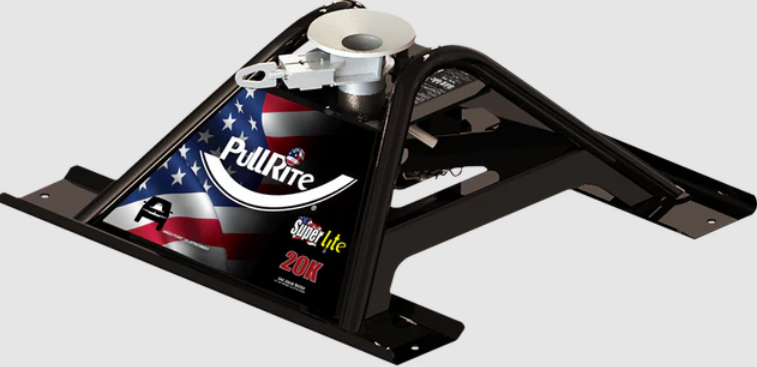

What You Need to Know Before Buying a Fifth Wheel Hitch
Towing a fifth wheel trailer requires the right hitch for safety, stability, and towing performance. Fifth wheel hitches mount in the bed of a pickup truck and connect to the trailer’s king pin, providing better weight distribution and improved control compared to traditional bumper towing. Choosing the right hitch depends on several factors:
Weight Capacity – Make sure the hitch is rated higher than your trailer’s gross trailer weight and pin weight. Most fifth wheel hitches are rated between 16,000 and 30,000 lbs, and the hitch must safely handle both the trailer weight and the downward pin weight
Truck Bed Length – Short-bed trucks typically require a sliding fifth wheel hitch to provide cab clearance during tight turns, while long-bed trucks can usually use a fixed hitch.
Mounting System Compatibility –Determine whether your truck uses above-bed rails or a factory puck system. The hitch must be compatible with your truck’s mounting setup for proper installation and fitment.
Hitch Features and Jaw Design—Features like dual-jaw locking systems, pivoting hitch heads, and vibration reduction can improve towing stability, reduce noise, and provide smoother towing performance.
Know Your Fifth Wheel Hitch Types
-
![]()
Fixed Fifth Wheel Hitch
Fixed hitches mount to industry-standard rails and remain in a stationary position in the truck bed. These are most commonly used with long bed trucks.
Best For: Long-bed trucks • Budget-conscious buyers • Straightforward towing setups
Pros: Simple design with fewer moving parts • Lower cost compared to sliding or puck systems • Strong, stable connection for highway towing
Cons: No additional turning clearance • Not ideal for short bed trucks• Rails remain in the truck bed when removed -
![]()
Sliding Fifth Wheel Hitch
Sliding hitches are designed for short bed trucks and allow the hitch to move backward during tight turns to prevent trailer-to-cab contact
Best For: Short-bed trucks • RV owners navigating tight campsites • Larger fifth wheel trailers
Pros: Provides extra clearance during tight turns • Essential for most short-bed trucks • Some models offer automatic sliding for convenience
Cons: Heavier and more expensive than fixed hitches • More moving parts means more maintenance. • Manual sliders require user input to reposition -
![]()
OEM Puck System Fifth Wheel Hitch
These hitches mount directly into factory puck systems found in many newer Ford, Ram, and GM heavy-duty trucks.
Best For: Newer HD trucks with factory tow prep packages • Users who want a clean truck bed • Frequent install/removal needs
Pros: Clean, rail-free truck bed when removed • Quick installation and removal • Strong, factory-integrated mounting system
Cons: Only compatible with trucks that have puck systems • Typically more expensive than rail-mounted options • Less universal fitment -
![]()
Modular Fifth Wheel Hitch System
Some fifth wheel hitches are modular systems where the hitch head, legs, and mounting system are purchased separately to match rails or puck systems.
Best For: Multi-use truck owners • Upgrading from fixed to sliding hitch •
Easier install and removal
Pros: Works with rails, slider bases, or puck systems • Easier removal in smaller pieces • Can upgrade mounting system later
Cons: Components often sold separately • Must confirm component compatibility • More complicated to purchase


-
 Learn More
Choosing the Best Fifth Wheel Hitch for Your Camper


-

-

-
-
-
-
 Read More
Free Delivery on Orders to Your Local Shop
When you select
'Ship to Local Shop'
at checkout 


-




Shop Fifth Wheel Hitch Brands


Featured Blogs
-
![]()
Choosing the Best Fifth Wheel Hitch for Your Camper
Despite their reputation for superior stability and maneuverability, ensuring a smooth and safe towing experience with a fifth wheel camper still heavily depends upon choosing the right hitch. In fact, it can really make or break your vacation.
-
![]()
Upgrading Your Fifth Wheel Pin Box
Thinking about upgrading your fifth wheel pin box? It's a smart move that can seriously enhance your towing experience. Whether your current pin box is showing signs of wear, you’ve upgraded to a new truck that needs a better fit, or the factory-installed model just doesn’t cut it anymore, there are plenty of reasons to consider this upgrade.
-
![]()
8 Trailer Upgrades to Make Hitching and Campsite Setup Easier
Few things spike your blood pressure faster than a supposedly “simple” trailer hook-upturning into a sweaty mess of missed attempts and muttered swear words. Hitching your trailer shouldn’t be the hardest part of your trip—it should be quick and painless.
-
![]()
Remove & Replace: Routine Hitch Maintenance
Longer days and warmer temps beckon us with dreams of cross-country adventures with all our favorite towable toys. But before you hit the open road and show off your pro-level towing skills, be sure you don’t overlook a crucial aspect of towing safety: hitch maintenance.


